Melania: A Bold Handwritten Script That Commands Attention and Shapes Perception
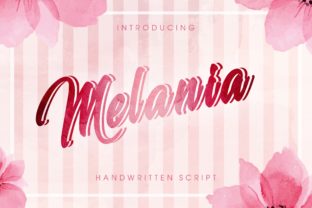
Every choice you make in a visual layout sends a signal. The typeface you select carries more weight than most people realize. Melania is one of those rare scripts that doesn't just decorate a page—it defines the emotional temperature of the entire composition. It's a handwritten script with presence, the kind that makes a design feel intentional rather than assembled. When you see Melania in action, you notice it. That immediate recognition is precisely what makes it valuable when used with purpose.
But this isn't about picking a pretty font. It's about understanding what happens when boldness meets elegance in a single typographic choice. Melania combines a striking visual weight with the fluidity of natural handwriting, creating a tension that works remarkably well across formats where personality and professionalism need to coexist. The letters feel grounded yet expressive, confident without shouting. For anyone building a brand, crafting a campaign, or designing materials that need to connect quickly with an audience, this balance is worth studying closely.
What Melania Brings to a Design That Other Scripts Often Miss
Many handwritten scripts lean too far in one direction. They're either so delicate they disappear at smaller sizes, or so casual they undermine credibility. Melania occupies a different space entirely. Its stroke weight is deliberately bold, giving it structural integrity even when scaled down. At the same time, the letterforms retain the organic rhythm of actual handwriting—the slight variations in connection, the natural flow from one character to the next.
This dual nature means Melania can function as both a display typeface and a supporting voice in a layout. You might use it large for a headline where impact matters most, then rely on it sparingly in subheadings or pull quotes to reinforce a consistent visual language. The key is recognizing that Melania isn't neutral. It carries emotional weight. It suggests warmth, confidence, and a certain creative fearlessness. When your project calls for those qualities, the script delivers them instantly.
Strategic Positioning Through Typeface Selection
Typeface choice is one of the most underrated strategic decisions in branding and communication. Before anyone reads a single word, they've already formed an impression based on how the text looks. Melania signals something specific: this isn't a corporate template. This isn't mass-produced thinking. The handwritten quality implies human involvement, and the boldness implies conviction behind the message.
For entrepreneurs launching a personal brand, this can be transformative. A signature-style script like Melania creates an immediate sense of authorship. It feels like someone wrote it, not just published it. For small business owners in creative fields—design studios, boutique agencies, artisan products—Melania bridges the gap between approachable and authoritative. You're saying you care enough about presentation to choose something distinctive, but you're not so polished that you've lost your personality.
When to Use Melania for Maximum Effect
Timing and context determine whether a bold script elevates your message or distracts from it. Melania performs best when you need to establish a focal point. Think about the first thing you want someone to see when they land on a page, open a brochure, or glance at a social media graphic. If that primary element is a short headline, a name, a tagline, or a call to action, Melania can make it unforgettable.
Use it when the message is concise and emotionally charged. A five-word headline in Melania carries more impact than a paragraph of body text ever could. Use it when you're introducing something new—a product name, an event title, a campaign concept. The script's distinctiveness helps anchor the idea in memory. Use it when consistency matters across touchpoints but you want each one to feel crafted, not cloned. A logo variation, a website hero section, and printed packaging can all share Melania without becoming repetitive because the script's organic character keeps each application feeling fresh.
Practical Planning Before Committing to a Bold Script
Before you integrate Melania into a project, ask yourself what job the typeface needs to do. Is it primarily about recognition, emotion, differentiation, or all three? Get specific about the outcome you want. If you're rebranding a service business, for example, you might want Melania to communicate that you're hands-on and personally invested in client outcomes. That's a strategic goal, not just an aesthetic preference.
Next, map out every place the script will appear. A common mistake is falling in love with a typeface and using it everywhere, only to realize it creates readability issues in certain contexts. Melania's bold strokes are an asset in larger sizes but can become challenging at very small scales or in long passages of text. Plan for complementary typefaces that handle body copy, fine print, and digital interfaces while Melania takes on the spotlight roles. This pairing approach ensures the script stays special rather than becoming exhausting.
Realistic Use Cases Across Different Fields
An independent publisher designing book covers for a memoir series might use Melania for author names and title treatments. The handwritten quality suggests personal narrative, while the boldness ensures shelf visibility. A marketing consultant creating proposal documents could use Melania for section headers and key statistics, adding warmth to what might otherwise feel like a dry business document. A wedding photographer building a website portfolio can apply Melania to navigation labels and gallery captions, reinforcing the personal, artisanal nature of the work.
Educators and course creators designing workbook materials often struggle to make learning resources feel inviting without sacrificing professionalism. Melania works well here for chapter titles, exercise prompts, and encouraging callouts. The script says this material was made by a person who cares, not churned out by a content factory. Freelancers across disciplines—from copywriters to interior designers—can use Melania in email signatures, invoice headers, and social media templates to build a recognizable visual thread that runs through every client interaction.
Pairing Melania With the Right Visual Environment
A typeface never works in isolation. The colors, spacing, imagery, and supporting fonts around Melania will either amplify its strengths or create visual conflict. Because Melania is already bold, it benefits from breathing room. Generous white space around the script allows each letterform to be appreciated. Neutral backgrounds—creams, soft grays, muted earth tones—let the typeface do the heavy lifting without competition.
When selecting a companion typeface, contrast is your friend. A clean sans-serif with even stroke weights creates a productive tension against Melania's organic variability. The sans-serif handles information; Melania handles emotion. This division of labor keeps layouts clear while still feeling personable. Avoid pairing Melania with other decorative or highly stylized fonts. One distinctive voice per design is usually enough. Let Melania be the star, and let everything else support it quietly.
Common Pitfalls When Using a Bold Handwritten Script
The most frequent error isn't choosing Melania—it's choosing it without defining what success looks like. When a typeface grabs attention this effectively, it can become a crutch. Designers and business owners sometimes rely on the font's personality to carry weak messaging or unclear positioning. The script can't fix a vague value proposition or a confusing offer. It amplifies what's already there, so make sure the underlying message deserves the amplification.
Another risk is overuse. Melania's distinctive character means it loses impact the more frequently it appears in a single piece. If every line of text uses the script, nothing stands out. Reserve it for the moments that matter most. Think of it like italics in writing—when everything is emphasized, nothing is. The same principle applies to bold handwritten scripts across a brand's full presence. Use Melania strategically, not exhaustively.
Context sensitivity also matters. A bold script that works beautifully on a wedding invitation might feel out of place on a corporate financial report. That seems obvious, but subtler misalignments happen regularly. Before committing, test Melania in the actual environments where your audience will encounter it. What looks elegant on a designer's large monitor might feel aggressive on a mobile screen. Test at real sizes, on real devices, in real lighting conditions if print is involved. Practical testing prevents expensive assumptions.
Making Intentional Decisions About Typeface Personality
Every typeface has a personality, whether you consciously choose one or not. The question is whether that personality aligns with what you're trying to achieve. Melania's personality is warm, confident, creative, and slightly unconventional. It doesn't whisper—it speaks clearly. It doesn't blend in—it claims space. Before you use it, verify that those traits support your goals rather than work against them.
For a financial advisor who wants to appear trustworthy but also approachable, Melania might be perfect for personal correspondence or client-facing presentations. For a tech startup positioning itself as disruptive and human-centered, the script could reinforce that the company values personality over corporate sterility. But for a law firm specializing in serious litigation, the same typeface might undermine the gravity clients expect. These aren't right or wrong answers—they're strategic assessments that should happen before any design work begins.
Long-Term Value of a Thoughtfully Chosen Script
Trends in typography shift, but distinctive quality endures. Melania isn't chasing a momentary aesthetic fad. Its strength comes from fundamentals: proportion, rhythm, clarity, and character. Typefaces built on those principles remain useful long after trend-driven alternatives feel dated. When you invest time in learning how to use a script like Melania effectively, you're building a skill that applies across projects and years.
This also affects the economics of design decisions. Constantly chasing new typefaces for every campaign or project creates visual inconsistency and wastes resources. Building a core typographic palette that includes a versatile, high-impact script like Melania means you can produce varied, effective work from a stable foundation. The script becomes a recognizable asset rather than a one-off experiment. Over time, audiences begin to associate that distinctive lettering with your brand's quality and perspective, which is precisely the kind of equity that compounds.
How to Evaluate Whether Melania Is Right for Your Next Project
Start with a simple exercise. Write down the three adjectives you want someone to feel when they encounter your design. If words like bold, personal, creative, or confident appear on that list, Melania deserves serious consideration. If your list includes minimal, understated, or institutional, you might need something quieter. Neither direction is superior—what matters is alignment between intention and execution.
Next, gather examples of how Melania has been used in contexts similar to yours. Study what works and what doesn't. Notice the spacing, the color choices, the supporting elements. Reverse-engineer successful applications to understand the thinking behind them. This isn't about copying—it's about learning the conditions under which the script thrives so you can create those conditions in your own work.
Finally, prototype before you finalize. Create a rough version of your most important application—a homepage header, an event poster, a product label—and live with it for a few days. Show it to people who match your target audience. Ask them what they notice first, what they think the piece is trying to communicate, and whether anything feels off. Their responses will tell you more than any theoretical analysis ever could. Adjust based on what you learn, and only commit when the script is clearly serving your goals rather than just decorating them.
Building a Design System That Includes Melania Responsibly
A design system is essentially a set of rules that ensures consistency across everything you produce. Including a bold script like Melania in that system requires clear guidelines. Specify exactly where the script appears—headlines only, or headlines plus subheadings? Specify sizing ranges—never below a certain point size on the web, never above a certain width in print. Specify approved pairings and color treatments. These constraints might feel limiting in the moment, but they actually increase creative freedom by eliminating guesswork.
Document what Melania is not for as much as what it is for. If body copy is off-limits, say so explicitly. If certain product lines or audience segments should use a different typeface, define those boundaries. The goal is to make every future decision about the script faster, easier, and more consistent. Teams, clients, and collaborators all benefit when the thinking has been done upfront and communicated clearly.
The Deeper Role of Typography in Communication Strategy
Typography often gets treated as a finishing touch—something you adjust after the content is written and the layout is mostly done. That's backwards. Typeface choice shapes how content is received from the very first glance. Melania doesn't just display words; it frames them with a specific emotional context. That framing influences whether someone leans in or scrolls past, whether they trust the source, and whether the message sticks.
When you treat typography as a strategic layer rather than a cosmetic one, your entire approach to communication becomes more intentional. You start asking better questions. What am I really trying to say here? Who needs to hear it? How do I want them to feel when they encounter this message? Those questions lead to better answers, and those answers lead to typeface choices that actually support your objectives. Melania, used with that level of intention, becomes more than a script—it becomes a reliable tool for shaping perception and driving outcomes.